Visiting the Valley of the Kings: the complete guide
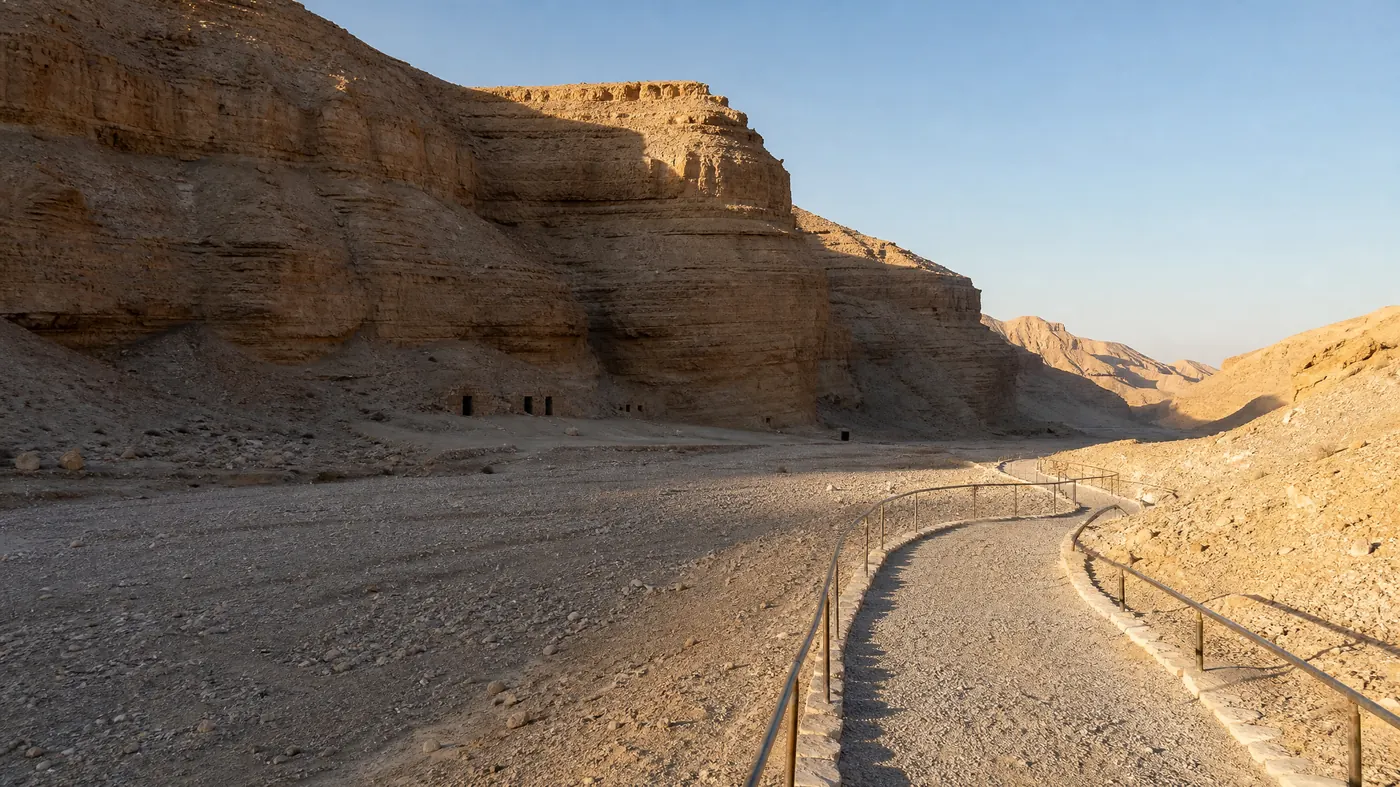
The decision that shapes the rest of the day
Almost everything written about this valley describes what is in it. Very little describes what a ticket buys, and those are different subjects. Entry is EGP 750 for a foreign adult and EGP 375 for a foreign student, on the Ministry of Tourism and Antiquities’ own figures; Egyptians pay EGP 60, or EGP 30. It lets you into three tombs, chosen by you, and is marked at each entrance until it is spent.
Four tombs sit outside that arrangement, each with its own price, and none of them consumes one of your three.
| Sold separately | Adult | Student | Where |
|---|---|---|---|
| Tutankhamun, KV62 | EGP 700 | EGP 350 | Valley of the Kings |
| Seti I, KV17 | EGP 2,000 | EGP 2,000 | No student rate at all |
| Ramses V and VI, KV9 | EGP 220 | EGP 110 | Valley of the Kings |
| Ay, WV23 | EGP 200 | EGP 100 | West Valley, a separate drive |
I have that conversation at the counter most mornings, and nobody in it has been misled by anyone: they have read a great deal about the valley and nothing about the ticket. The rule and its sourcing are on what the EGP 750 ticket admits you to; the figures sit in one grid on the ticket price list.
First: crossing the river, which decides your hour
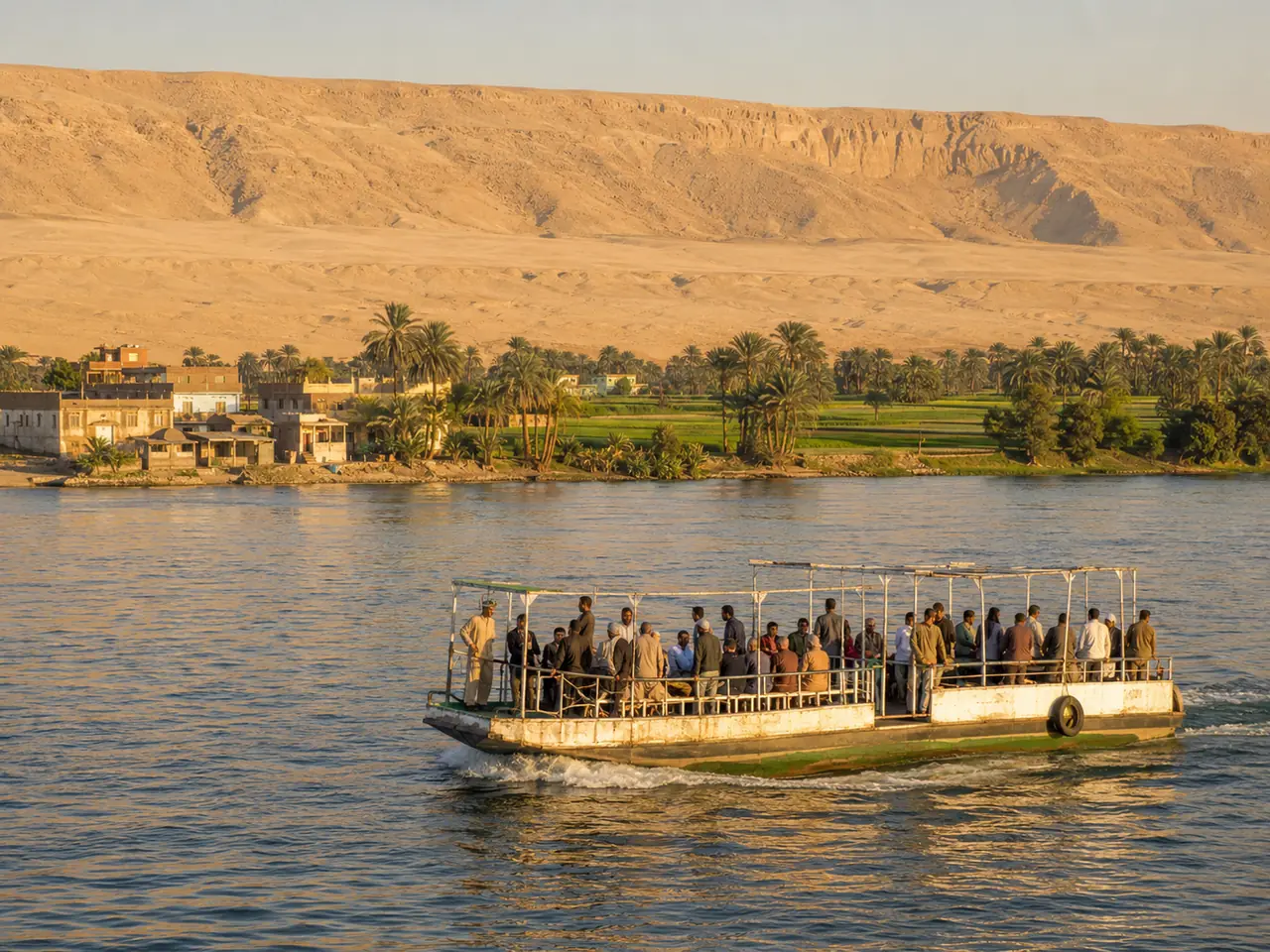
The valley is on the West Bank and Luxor town is on the East Bank. You cross by public ferry, roughly EGP 10 to EGP 20 per person each way, or by the road bridge south of the city, which is a substantial detour by car. The ferry has no timetable: it leaves when it is full, usually within ten to fifteen minutes. Carry small notes, and expect to be quoted more than a local pays.
This site prints no taxi fare and no tuk-tuk fare. Taxis are never metered, the price is agreed before you get in, and the 2026 sources we checked for a full day disagree by a factor of five, which is an absence of information rather than a range. Ask at your hotel that morning. Getting to the valley covers both crossings.
Then: the counter, and the rule people arrive unready for
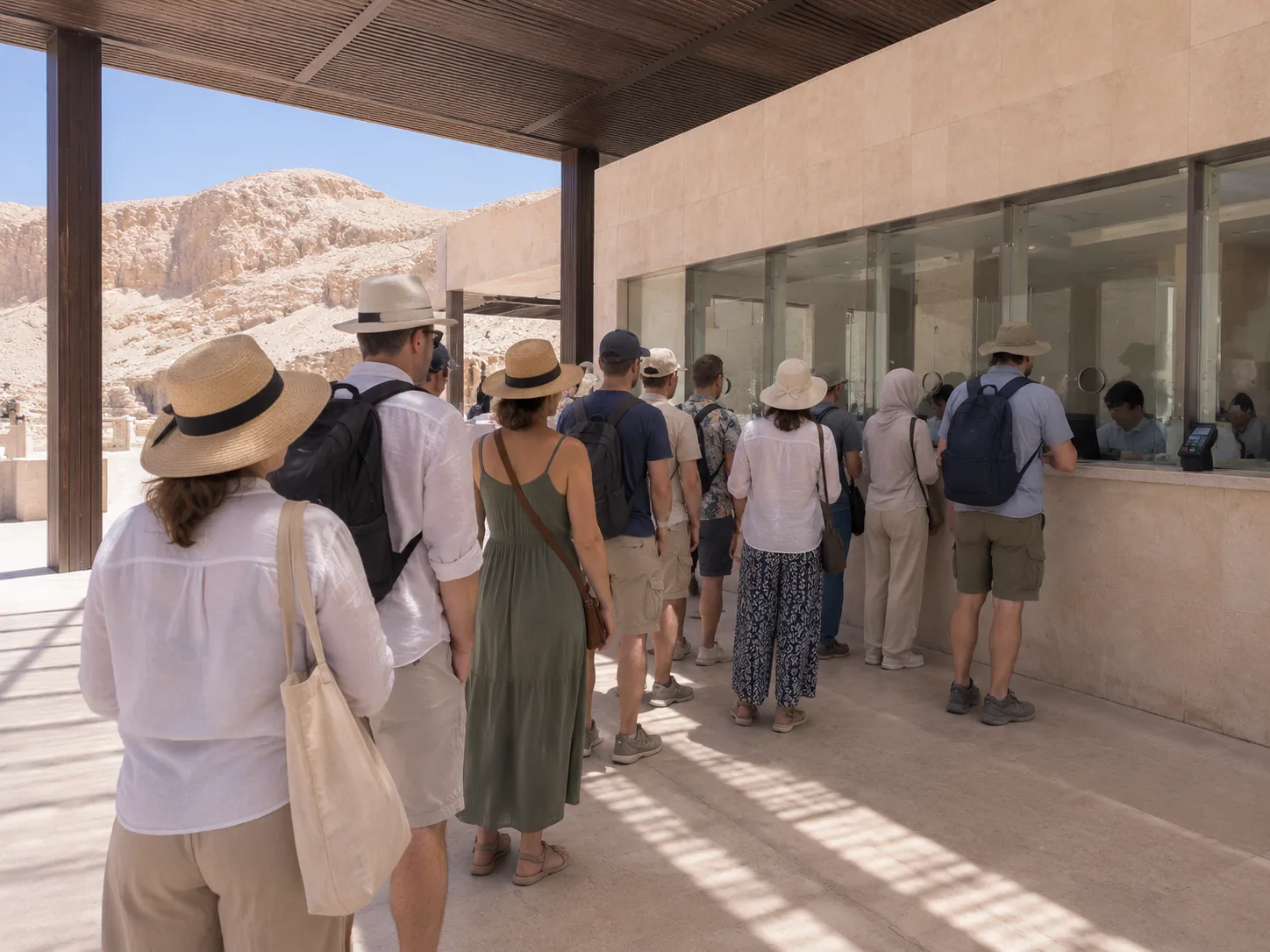
The ticket window does not take cash. It has not since June 2023, when an official announcement reported by Egypt Independent named this valley among nine Luxor sites where cash payments were suspended in full. Visa and Mastercard work there. Arriving with EGP 750 in notes and no card is a problem you cannot talk your way out of.
The opposite mistake costs as much. The sweeping version, that cash is never accepted in Egypt, is wrong. The tram wants cash, tips are cash, and several smaller West Bank sites remain cash-only. Bring both, and keep the notes small: the card-only rule has the announcement behind it, and the packing page has the rest of the bag.
The tram, and the distance nobody publishes
A shuttle tram runs from the visitor centre up to the tombs: EGP 20 per person round trip, about three minutes, officially optional. Some visitors report site staff pressing them to buy a ticket anyway. If that happens you are not being scammed, you are being sold something you may decline.
Whether you could walk it instead, this site cannot say: no source states that distance in metres or in minutes, and a three-minute ride is a duration on a vehicle rather than a distance on foot.
Choosing your three, the only real decision in the valley
Nobody publishes which tombs are open; the Ministry’s site carries prices and hours and stops. Tombs close in rotation for conservation, six independent sources describe the practice, and none can point to a schedule because none is published. Usually eight to ten are open, and the board at the entrance is the only statement of today’s set.
Two independent 2026 guides name the same ten: KV1 Ramses VII, KV2 Ramses IV, KV6 Ramses IX, KV8 Merenptah, KV11 Ramses III, KV14 Tausert and Setnakht, KV15 Seti II, KV16 Ramses I, KV43 Thutmose IV and KV47 Siptah. Carry that as a good guess rather than a roster. KV34, Thutmose III, has not been open in years, and old guidebooks still send people looking for it — which tombs are open.
The choice is hard because you make it in the sun, with people waiting behind you. So make it before you cross. KV11 runs 188 m and is called the Harper’s Tomb for its paintings of two blind harpers; its axis visibly bends where the ancient excavators broke into the earlier KV10. KV2 carries 656 ancient graffiti left by Greek and Roman visitors. KV16 is only 29 m, which is why it makes a sensible third once the heat has won the argument. Those three, KV8 with its granite sarcophagus lid and KV6 with the gentlest slope anybody describes, are set against each other on which three to choose — which also disposes of the popular claim that KV14 is the largest tomb here. It is not.
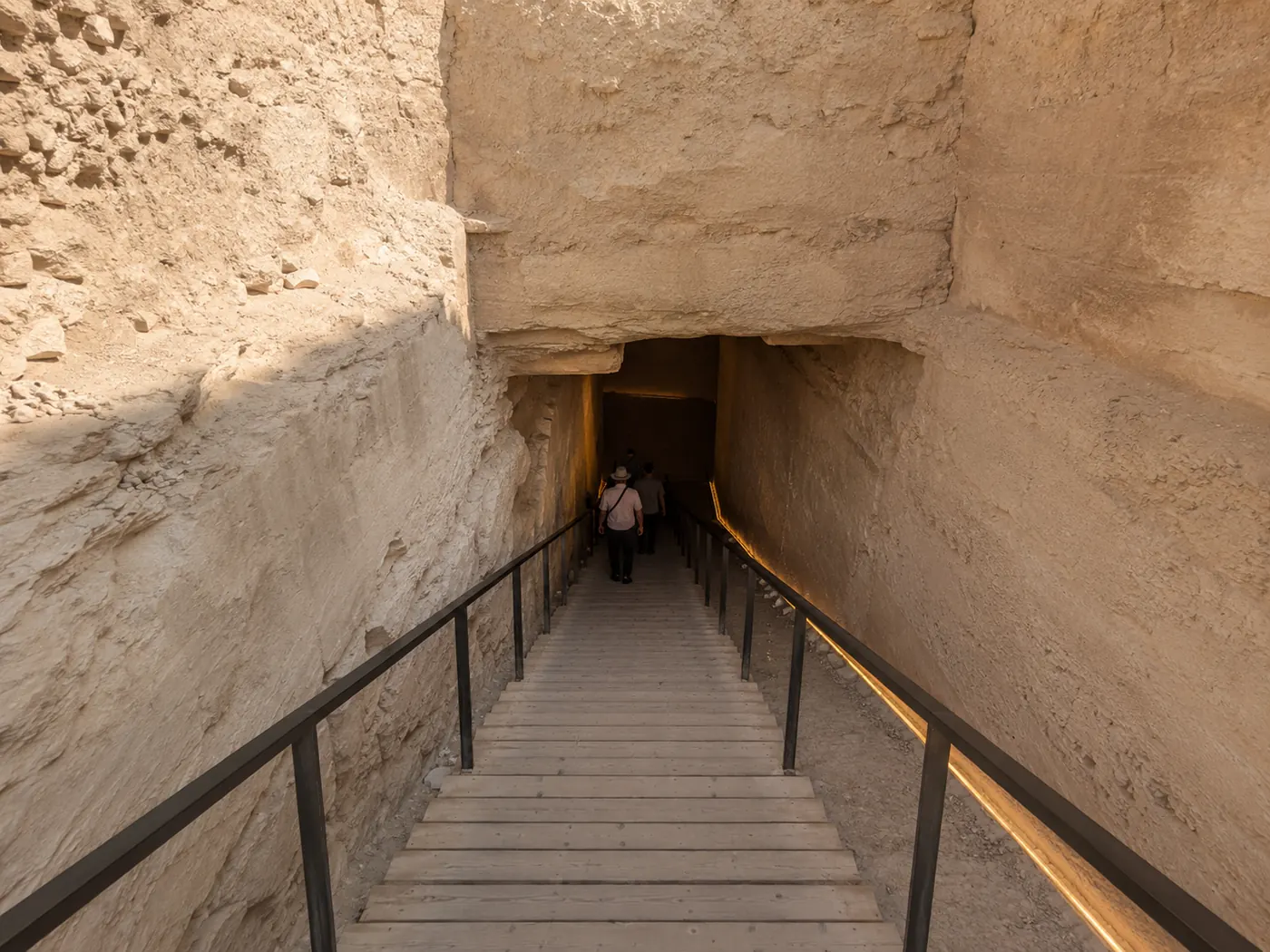
The four tombs that are not on your ticket
Tutankhamun, KV62, EGP 700 adult and EGP 350 student. He is in this valley and still in this tomb: the mummy has been on display inside KV62 since 4 November 2007, in a climate-controlled glass box, and in 2025 the director of the Egyptian Museum confirmed he would stay. That comes from an encyclopaedic source rather than a ministry announcement, a weaker class of source than the price beside it. It is a small tomb, and whether it is the right EGP 700 to spend is argued out on the Tutankhamun page.
Seti I, KV17, EGP 2,000, with no student discount of any kind. The largest surprise at the window, with a reason behind the price: 137.19 m, seven corridors and ten chambers, painted raised relief, and a vaulted burial-chamber ceiling of golden stars on deep blue with the circumpolar constellations. The Seti I page works out who should pay it.
Ramses V and VI, KV9, EGP 220. The cheapest add-on and, two independent sources say, the best value in the valley: an almost complete Book of Caverns, the sky goddess Nut drawn twice across the vaulted ceiling, and roughly 995 ancient inscriptions from the 1st century BC to the 4th century AD. If one add-on is all the budget allows, this is the one to argue about. Ay, WV23, EGP 200, is out in the West Valley, a separate drive rather than a walk to the far end.
Nefertari is not here at all
She is QV66, in the Valley of the Queens, roughly 2 km away and on a different ticket — EGP 220 entry there, with the tomb published at EGP 2,500 on the November 2024 list. No Valley of the Kings ticket admits you to it, and whether it is open is something nobody could confirm in either direction. Ask at the Valley of the Queens ticket office. The premise, corrected.
The heat is not weather here, it is the timetable
The valley is open 6:00 AM – 5:00 PM daily, Fridays included, with no weekly closing day. Luxor’s mean daily maximum is 41.4 °C in July and 41.2 °C in June and August, with a recorded extreme of 49.2 °C in July 2000. Those are ambient figures for the city; nobody publishes a temperature for the air inside a tomb, so no such number appears here.
Five independent sources put the crowds between 10 am and 2 pm and call an 8 am arrival comfortable. That advice comes from guides and experienced visitors rather than from any ministry, and it is why the ferry decides your day. When to come weighs the hour against the month, and the hour wins.
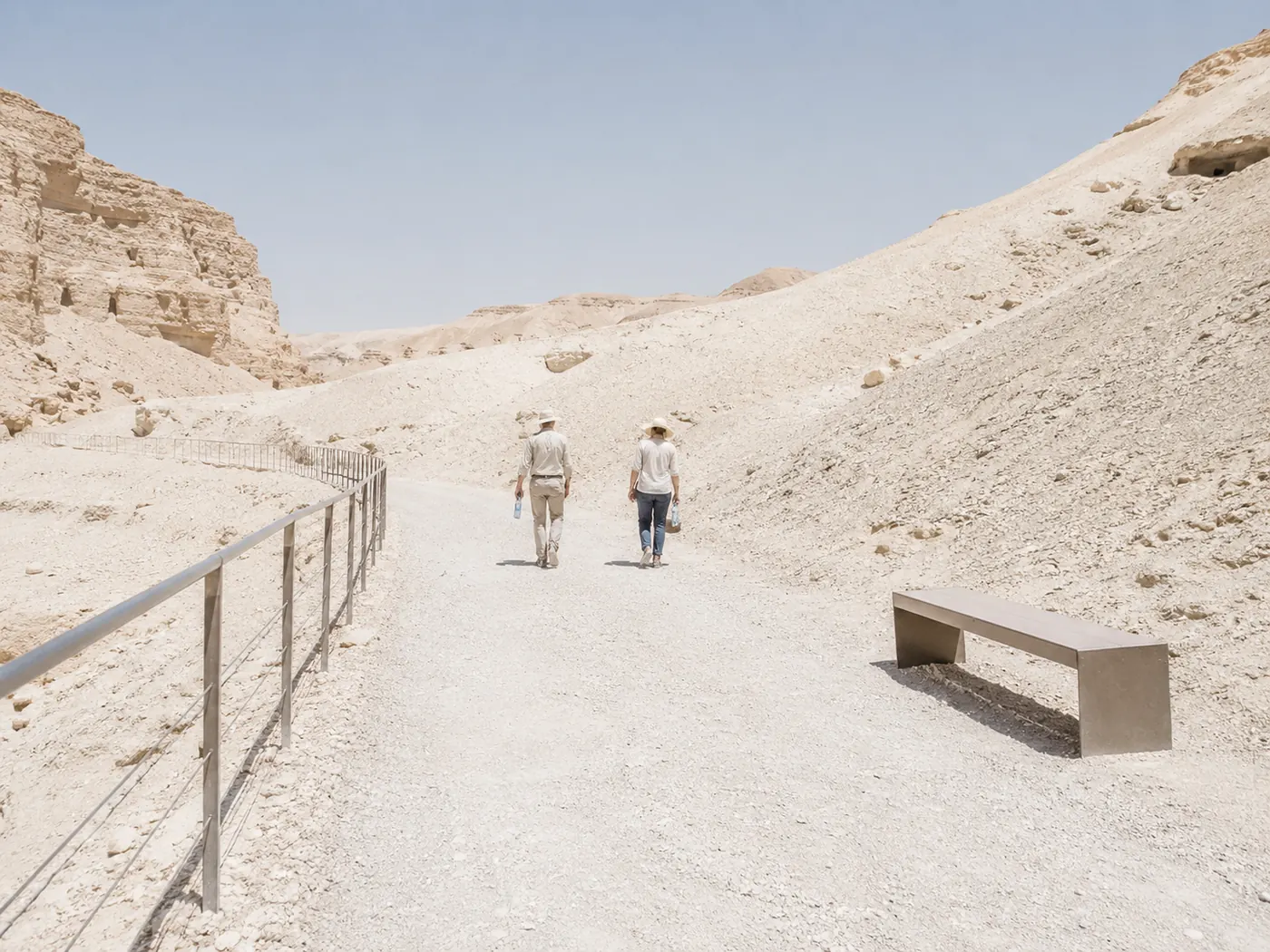
What you may not take down the steps
Food and water may not go into the tombs. Two independent sources state it, and I have never seen it printed anywhere a visitor reads first. It changes how a hot morning works: the bottle is for the walking and the waiting, and each descent is a stretch without it. Water is sold on site at one small café, at prices three sources call inflated, and no figure for it appears here because none was checked.
Cameras are easier than the internet suggests. The personal photography permit has been abolished, including for DSLR, and the Ministry’s November 2024 price list carries no camera line at all. Tripods and flash are prohibited, and drones are prohibited nationwide. This site carves out no individual tomb from that rule in either direction, because the sources do not settle it: photography explains what is unresolved.
How long the whole thing takes
Two hours is realistic for three tombs at a comfortable pace, an hour if you rush, three to four with the separately ticketed ones added. None of that includes the crossing, the queue or the tram, so treat the valley as half a day. How much time you need breaks it down and how many days in Luxor puts it inside a trip.
What it all costs, with the working shown
What people budget: EGP 750
EGP 3,670
EGP 750 general entry + EGP 700 Tutankhamun + EGP 2,000 Seti I + EGP 220 Ramses V and VI. That is 4.89 times the headline price, and it still excludes the EGP 20 tram, the West Valley and the Valley of the Queens.
Very few people should spend that; it is the gap between what a visitor budgets and what the valley can charge. And one caveat sits under every figure here: the newest official price document is the Ministry’s printed list dated 5 November 2024, so these are current published rates rather than guarantees. What the day costs assembles the realistic versions.
There is also a Luxor Pass — US$130 Standard and US$250 Premium for an adult, US$70 and US$130 for students, each valid five consecutive days, and only the Premium tier includes Seti I and Nefertari. It is sold in person only, at Karnak and at this valley’s visitor centre, and no official Ministry page for it exists at all, so every price traces to travel media. Converted at about 50 EGP to the dollar, the mid-market rate read on 16–17 August 2026, the Standard tier is roughly entry plus Tutankhamun plus Ramses V and VI, so it pays only across several sites and several days: the pass page does that sum out loud.
Do you need a tour for any of this?
If you are staying in Luxor, are content to take the ferry and would rather pick your own three tombs, no. A tour buys convenience rather than access, and that convenience is real: somebody solves the crossing, somebody owns the clock so you are underground early, and somebody beside you can read what is on the wall. Read the reviews of any West Bank product and people name their guide, not the tombs.
Two things to hold on to before you book. A tour price is not an entry ticket unless the product’s own inclusions say so in those words: one widely sold West Bank half-day advertises from about US$20 and states “Admission Ticket Not Included” in its own listing. And the dearest listing on this site sells entry to one tomb for US$95 when that tomb is EGP 700 at the counter, roughly US$14 at about 50 EGP to the dollar, the mid-market rate read on 16–17 August 2026. All six tours, compared prints every price beside the number of reviews behind it, and is it worth it answers the bigger question with a “for whom” attached.
The day in the order I would run it
- Pick your three the night before, knowing the board may overrule you.
- Cross early. The ferry goes when it is full; the crowds land between 10 am and 2 pm.
- At the counter: card for the EGP 750, plus any separate tombs. None of them uses up one of your three.
- Cash for the tram, EGP 20 return.
- Drink before each descent. Nothing to eat or drink goes into a tomb.
- Long tombs first, while it is cool. Keep KV16 at 29 m for last.
- Leave before the middle of the day rather than after it.
Take one sentence from this page to the window: the EGP 700 for Tutankhamun, the EGP 2,000 for Seti I and the EGP 220 for Ramses V and VI are bought in addition to your three, never instead of one of them. The people who lose money here are the ones who quietly drop a tomb they had already paid for, because they assumed a swap had happened.
Still deciding whether to come at all? The pyramids or the valley treats them as the different places they are, and is Luxor safe carries what could be checked and nothing else.
Frequently asked questions
What does the Valley of the Kings ticket include?
General entry is EGP 750 for a foreign adult and EGP 375 for a foreign student, and it admits you to three tombs of your choice from the tombs open that day. Tutankhamun, Seti I and Ramses V and VI are not among them; each is a separate ticket bought on top, and buying one does not use up one of your three.
Is Tutankhamun still in his tomb in the Valley of the Kings?
Yes. The mummy has been on display inside KV62 since 4 November 2007, in a climate-controlled glass box, and in 2025 the director of the Egyptian Museum confirmed Tutankhamun would remain in the Valley of the Kings. Seeing him costs EGP 700 on top of the general entry ticket.
How much time do you need at the Valley of the Kings?
About two hours for three tombs at a comfortable pace, roughly an hour if you rush, and three to four hours if you add the separately ticketed tombs. None of those figures includes the river crossing, the queue at the ticket counter or the tram.
Can you pay cash at the Valley of the Kings?
Not for entry tickets. Cash has not been accepted at the window since June 2023, when an official announcement named the Valley of the Kings among nine Luxor sites where cash payments were suspended in full; Visa and Mastercard work there. Carry cash anyway for the EGP 20 tram, tips and the smaller West Bank sites.
What time should you arrive at the Valley of the Kings?
The valley opens at 6:00 AM and closes at 5:00 PM, daily, with no weekly closing day. Guides and experienced visitors put the crowds between 10 am and 2 pm and describe an 8 am arrival as comfortable. Luxor’s mean daily maximum is 41.4 °C in July, so the hour you arrive matters more than the month you come.
Which tombs are open in the Valley of the Kings?
Usually eight to ten, and the set changes for conservation work. No official list is published anywhere and no rotation schedule exists, so the board at the entrance is the only statement of today’s set. Two 2026 guides name the same ten tombs, and KV34, Thutmose III, is not among them.